RomePhotoLab street photography exhibition
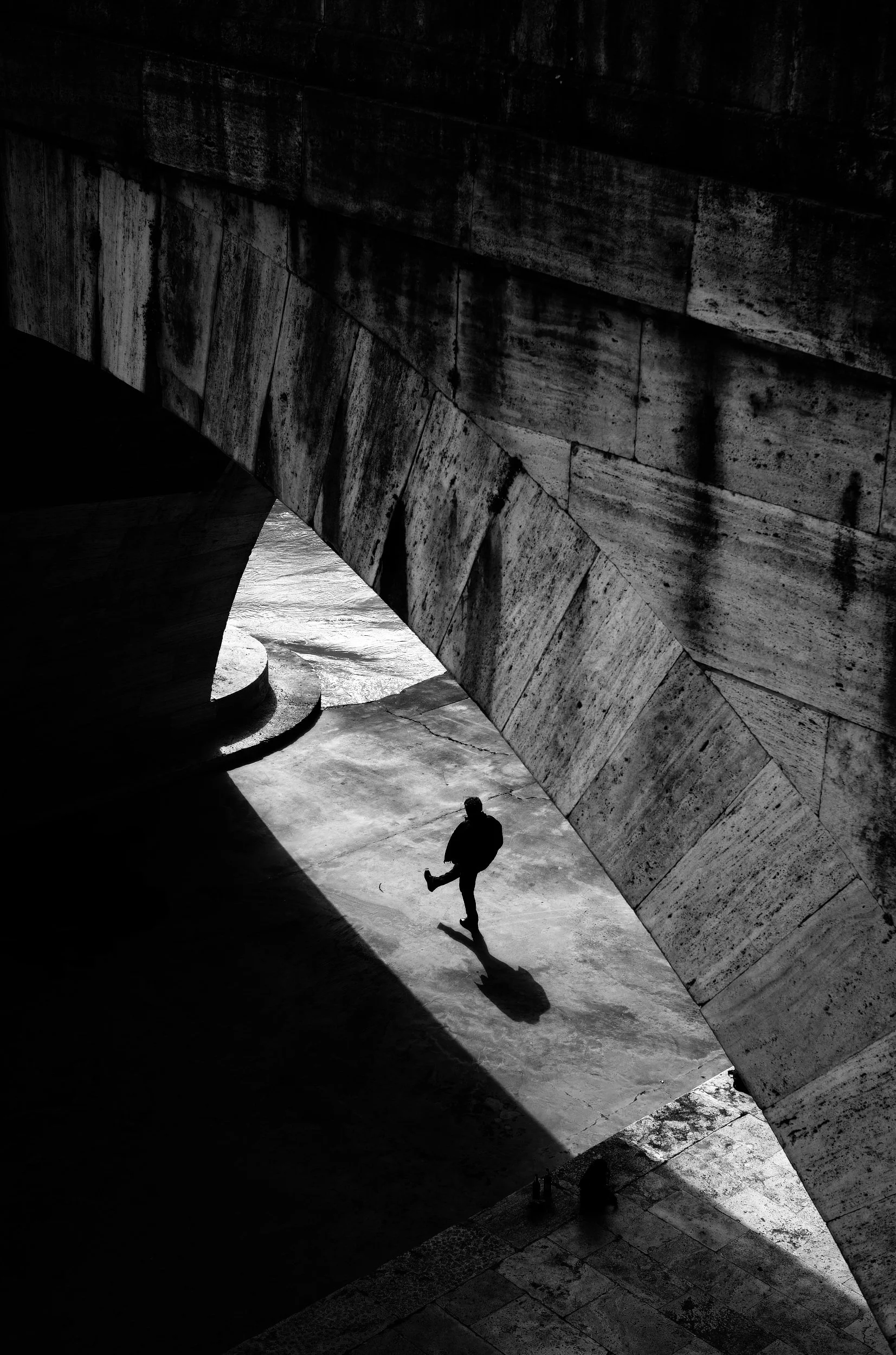
I’m honoured to be featured in the RomePhotoLab RPL26 street photography exhibition in Rome, Italy. My photo will be featured among some great photographers photos on the 3rd of October, 2026. The photo featured was taken in Rome, Italy, from the Ponte Cestio bridge that connects to the Isola Tiberina, a tiny island on the River Tiber.
Patience Pays Off
There are many different approaches to street photography, and everyone has their own way of capturing fleeting moments. Those moments are everywhere, but they often go unnoticed unless you slow down and pay attention to what’s unfolding around you.
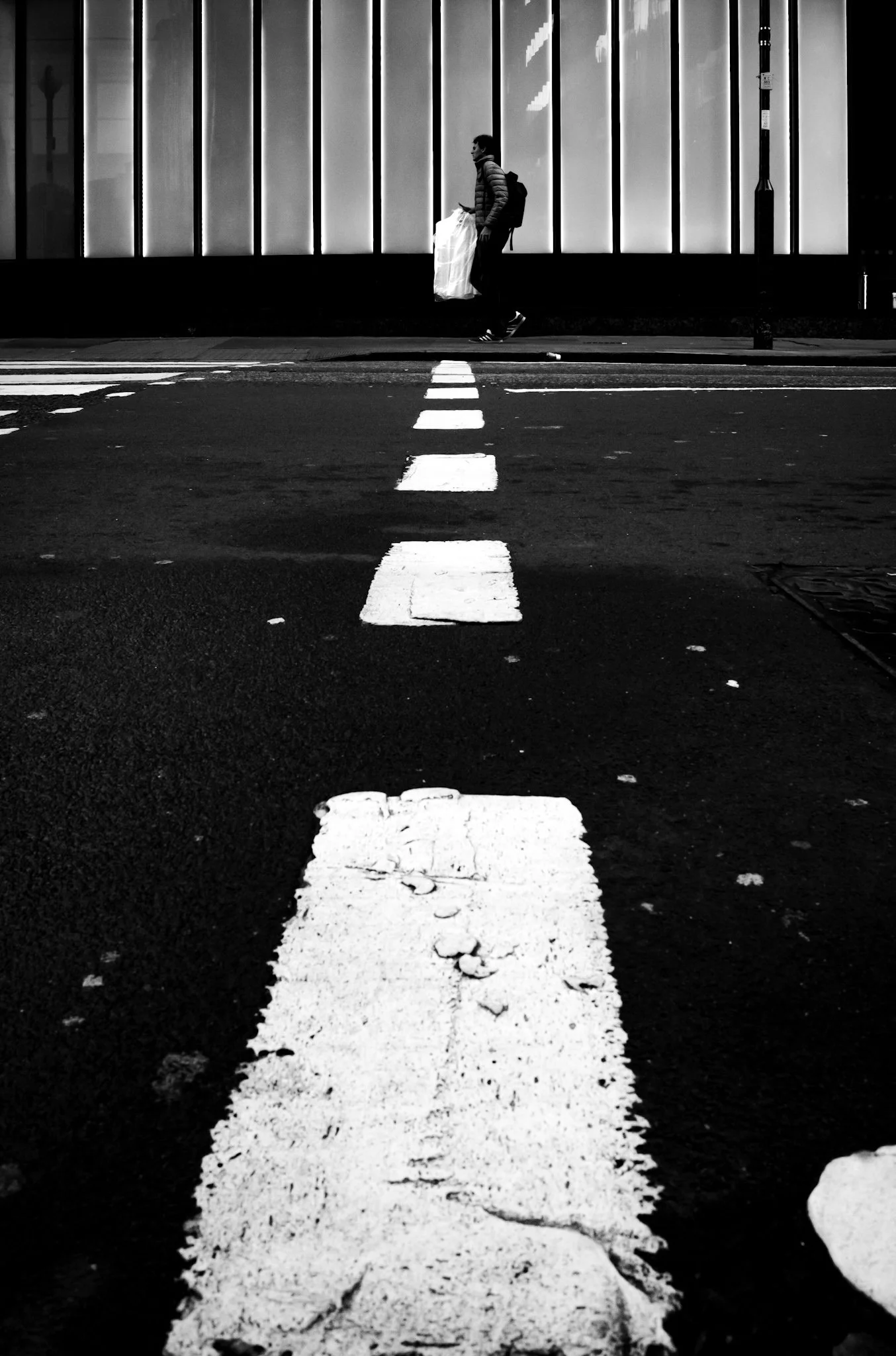
One of my approaches is patience. When I find a scene that interests me, I compose the frame and wait. I don’t settle for the first good photograph. If I get a good shot, I ask myself whether something stronger might still happen.
In this scene, a person simply walking through the frame wasn’t enough. The road markings already created a strong visual structure, and I wanted a subject that interacted with them in a way that felt intentional rather than accidental. Waiting allowed the final element to fall into place and bring the scene together.
Patience, for me, isn’t passive. It’s an active decision to stay with a scene long enough for it to reveal something more. Over time, this approach has become one of the biggest contributors to how I see and photograph the street.
Using Alternative Light Sources
When I finish shooting for the day and start heading back to the Tube, I often end up deviating from my route. Something catches my eye, then something else, and before I know it the walk home has turned into an extension of the shoot. This image came from one of those moments.
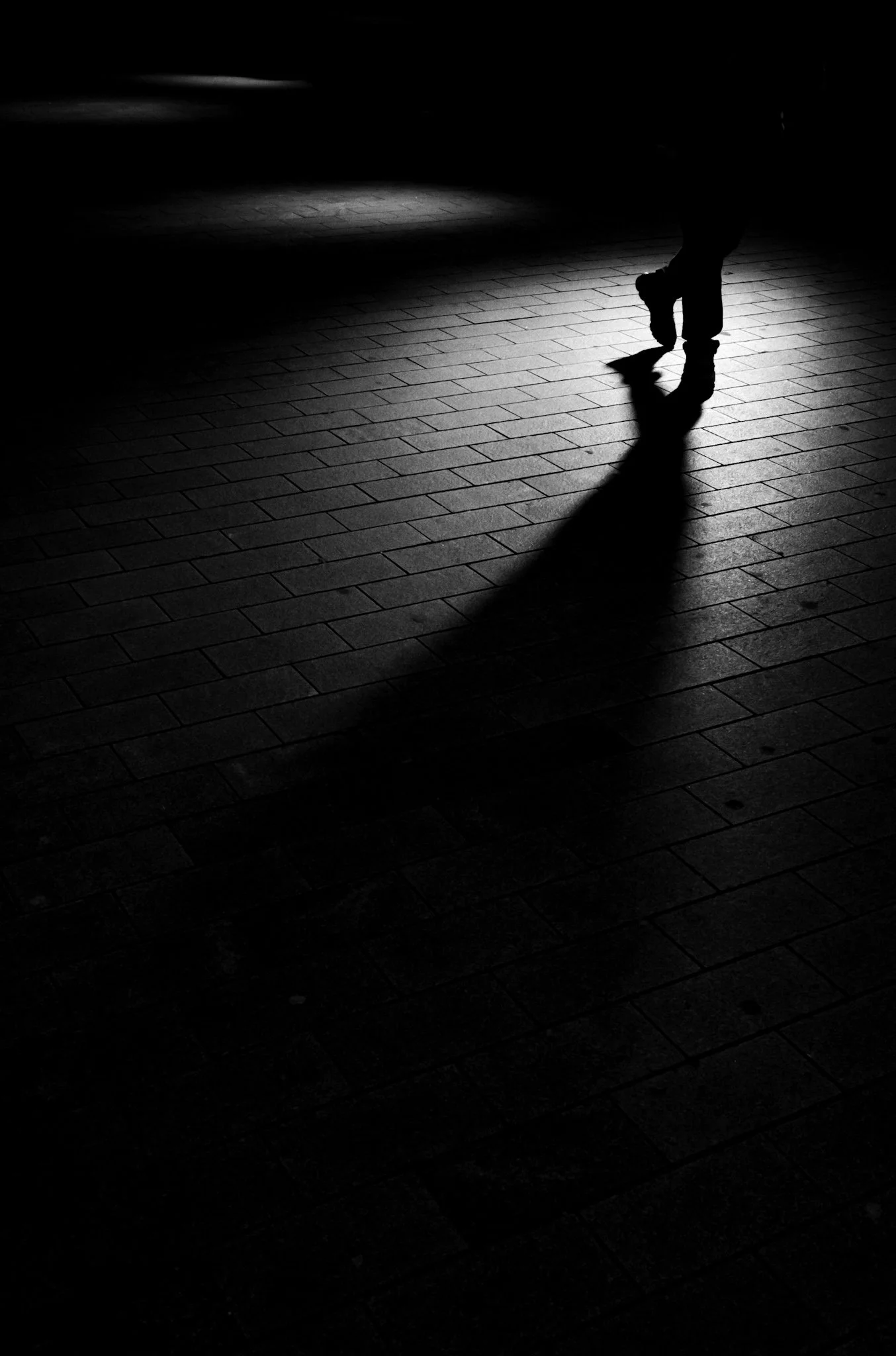
The photograph was taken at a small Christmas market near the entrance to Tottenham Court Road Elizabeth Line station in London. It was early evening. The sun was dropping, natural light was fading, and conditions were becoming less than ideal. Normally, that’s my cue to stop. I prefer working with daylight. But this time, something different stood out.
Red spotlights were aimed at the ground around the market stalls. Against the surrounding darkness and movement, the light felt deliberate and graphic. I positioned myself to take advantage of it and waited for someone to pass cleanly through the illuminated area.
The scene was busy. People moved constantly in every direction. I held the camera at chest level and waited for a break in the crowd, hoping for a single figure to step into the light. It took longer than expected, but eventually the moment presented itself.
This image is a reminder that usable light isn’t limited to sunlight. Even in low-light conditions, artificial or incidental lighting can shape a scene, isolate a subject, and create an image worth staying out a little longer for.
Framing Outside The Box
Framing is one of my favourite things to look for when I’m photographing the street.
It’s rewarding when someone falls into place naturally, mid-step or mid-gesture, framed by their surroundings without any intervention. Framing isn’t limited to obvious shapes like doorways or windows. It can come from almost anything, including shadows.
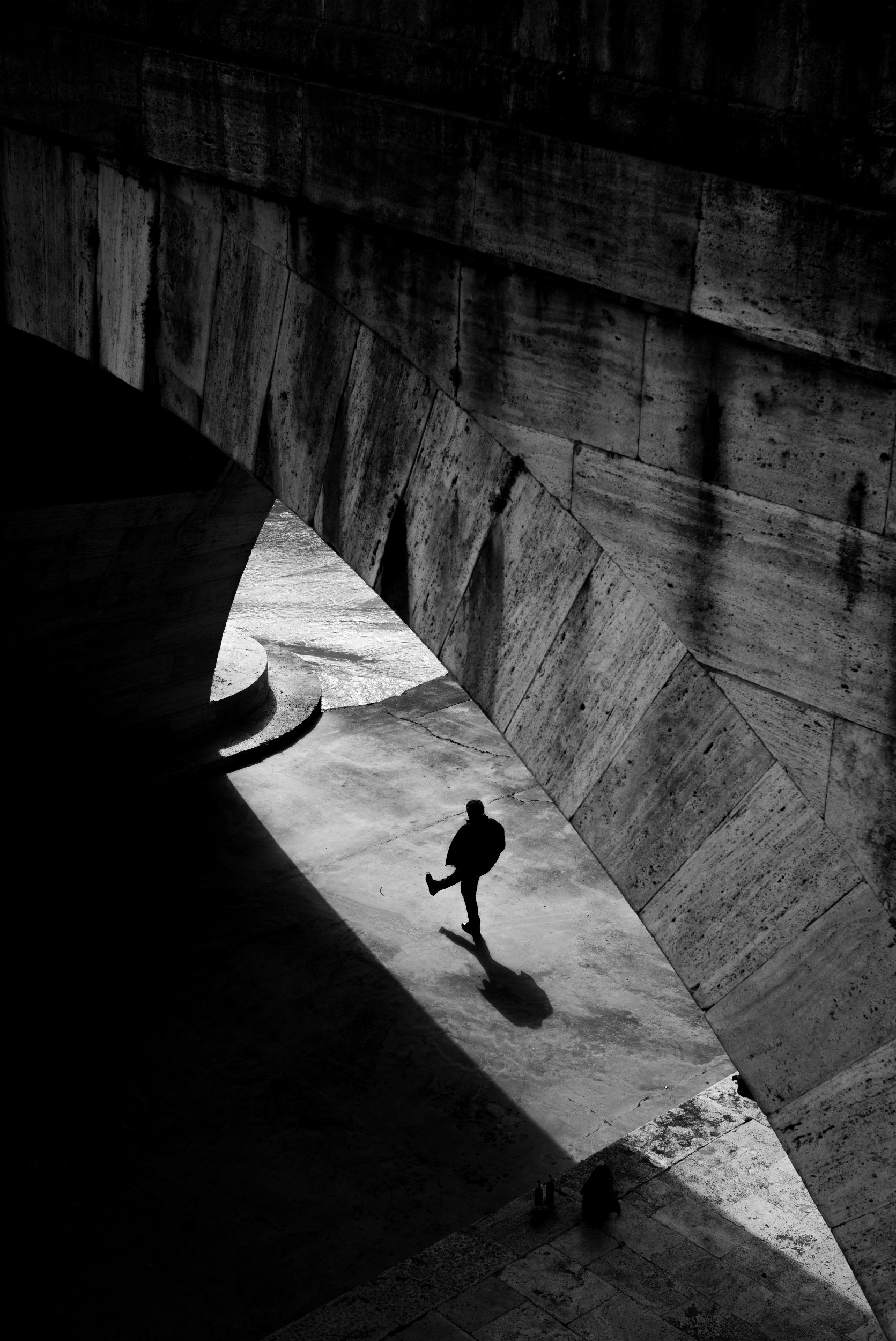
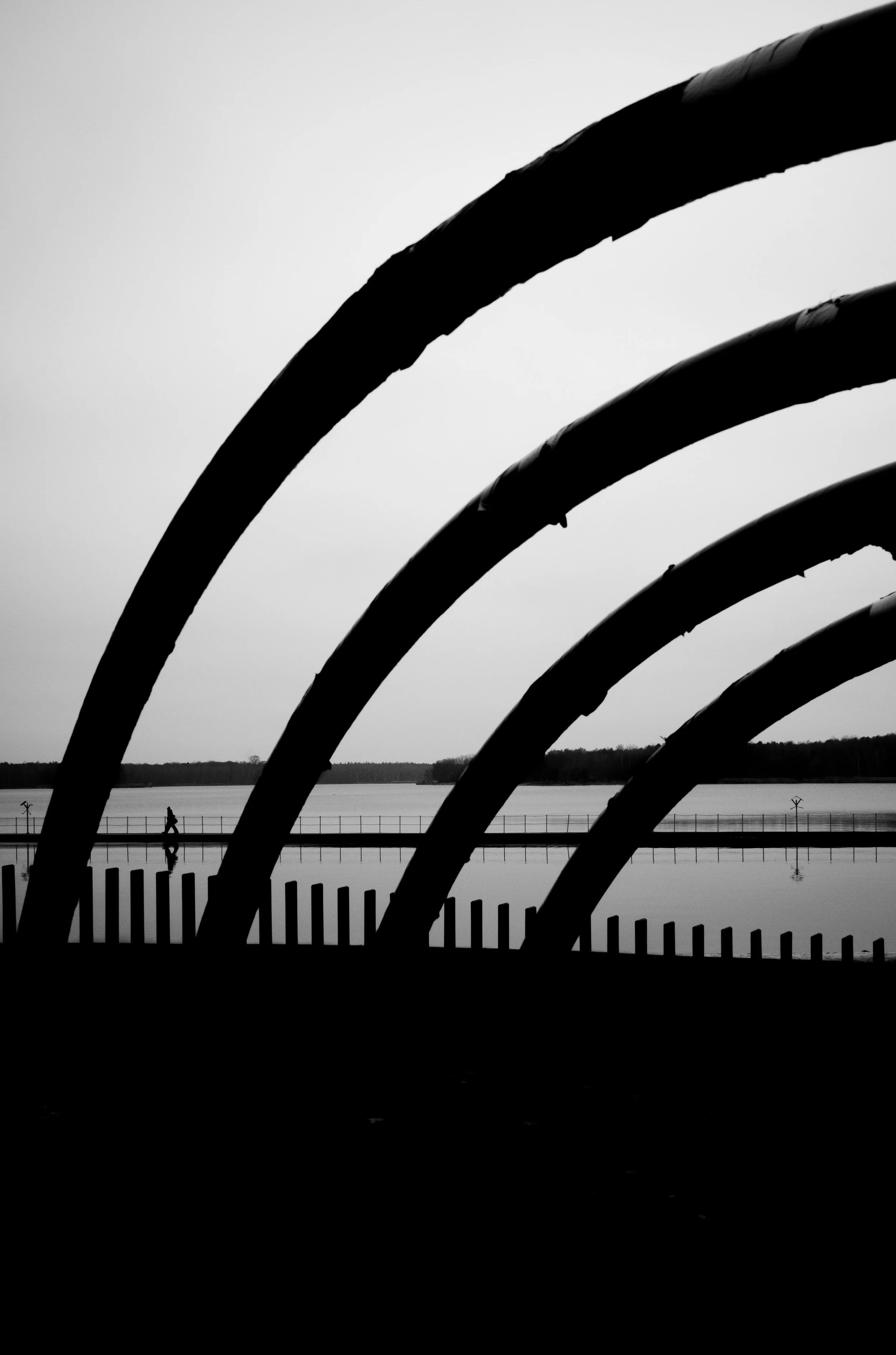
This photograph was taken in Rome, along the banks of the River Tiber. I had stopped for a short break and was leaning against the barrier above the river, eating an ice cream, when I noticed a person walking below. For a brief moment, they were perfectly positioned between the arch of the bridge and the shadow it cast on the ground. I lifted the camera and took the shot, still holding the ice cream. Seconds later, the framing disappeared as they moved on.
There are two things I take from moments like this.
First, framing opportunities are everywhere, but they’re often subtle. Pay attention not just to physical objects, but to light and shadow as well. They can be just as effective in isolating a subject.
Second, moments like this don’t announce themselves. They appear briefly and disappear just as quickly. Even when you’re taking a break, staying visually engaged means you’re ready when something unexpected happens.
LFI feature
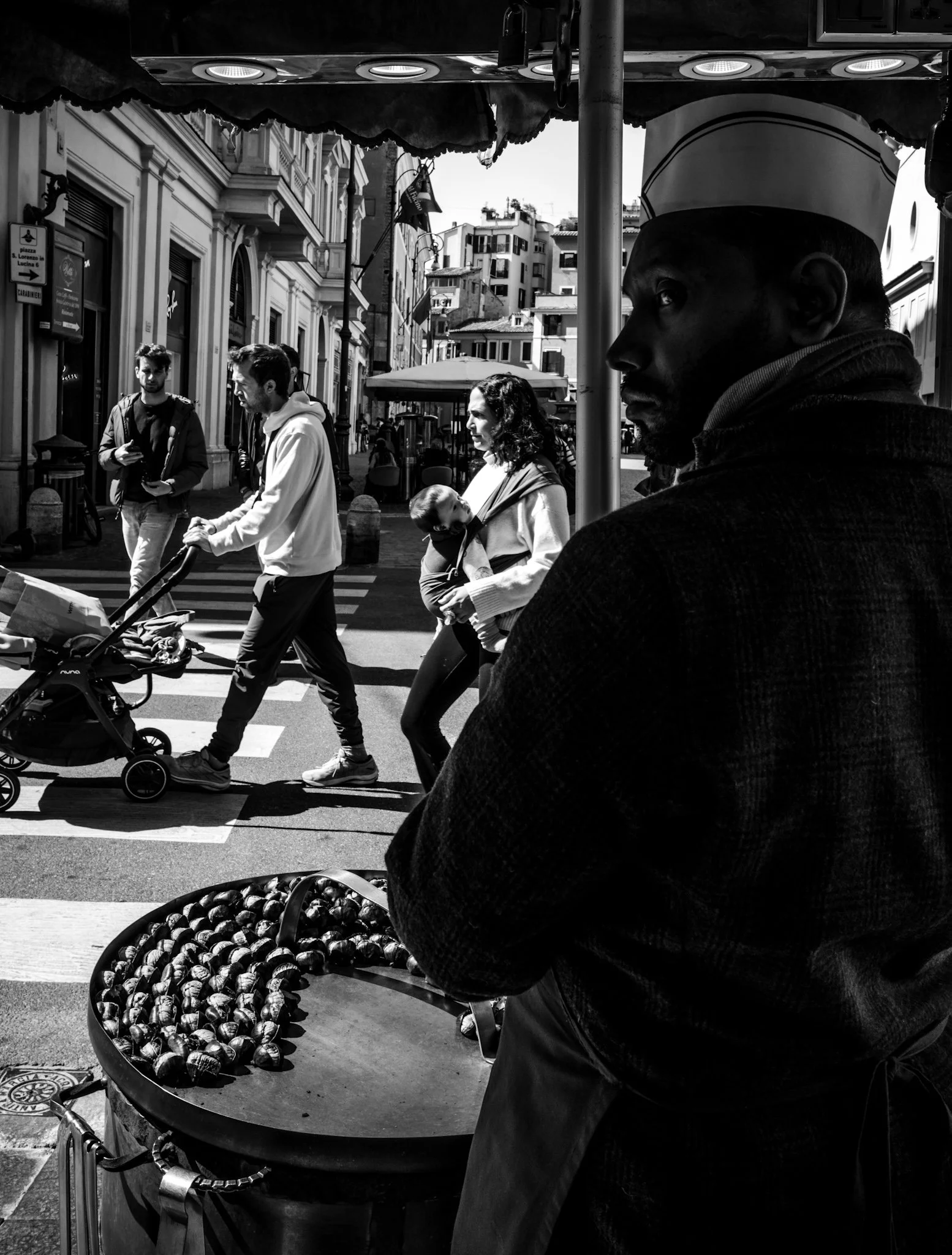
I’m honoured to have my Chestnut Vendor photo featured in the “Vendors” article on Leica Fotografie International.
I shot this in Rome, at the end of a narrow street that opened into a busy market. There were plenty of roasted-chestnut vendors around, but this one stood out. His stall faced directly toward the flow of people, and the scene had a sense of rhythm and presence that caught my eye.
Embracing the Challenge of Low Light
Light is at the heart of photography. The sensor, or film, relies on it to form images, and without it, there’s only darkness. Strong light creates contrast and makes images more striking, which is why sunny days are a street photographer’s best friend.
But what about those overcast days when shadows are scarce? This is where creativity truly comes into play. Thinking outside the box and experimenting with different elements can elevate your shots. Paying attention to the contrast between light and dark clothing, how artificial lighting interacts with a scene, and the natural shading of buildings are all factors that can add depth to your images. Understanding how these elements work together can turn a simple shot into something compelling.
The key is to experiment. Learning what works and what doesn’t through practice. I can’t dictate what someone should photograph, but I can guide them on how to capture it effectively. I plan to explore these elements further in future posts and possibly through a workshop, where I can share hands-on insights with others who are eager to refine their craft. The most important thing to remember? Experimentation is key. It’s the best way to learn.
Light is life...
Today marks the day that I publish my photography website. I hope my photos can bring inspiration to others who also want to do black and white street photography.